Key Takeaways
- Direct mail and digital campaigns each offer unique lead generation and compliance considerations for insurance professionals.
- A blended, compliance-focused approach can maximize both reach and long-term marketing ROI for your practice in 2026.
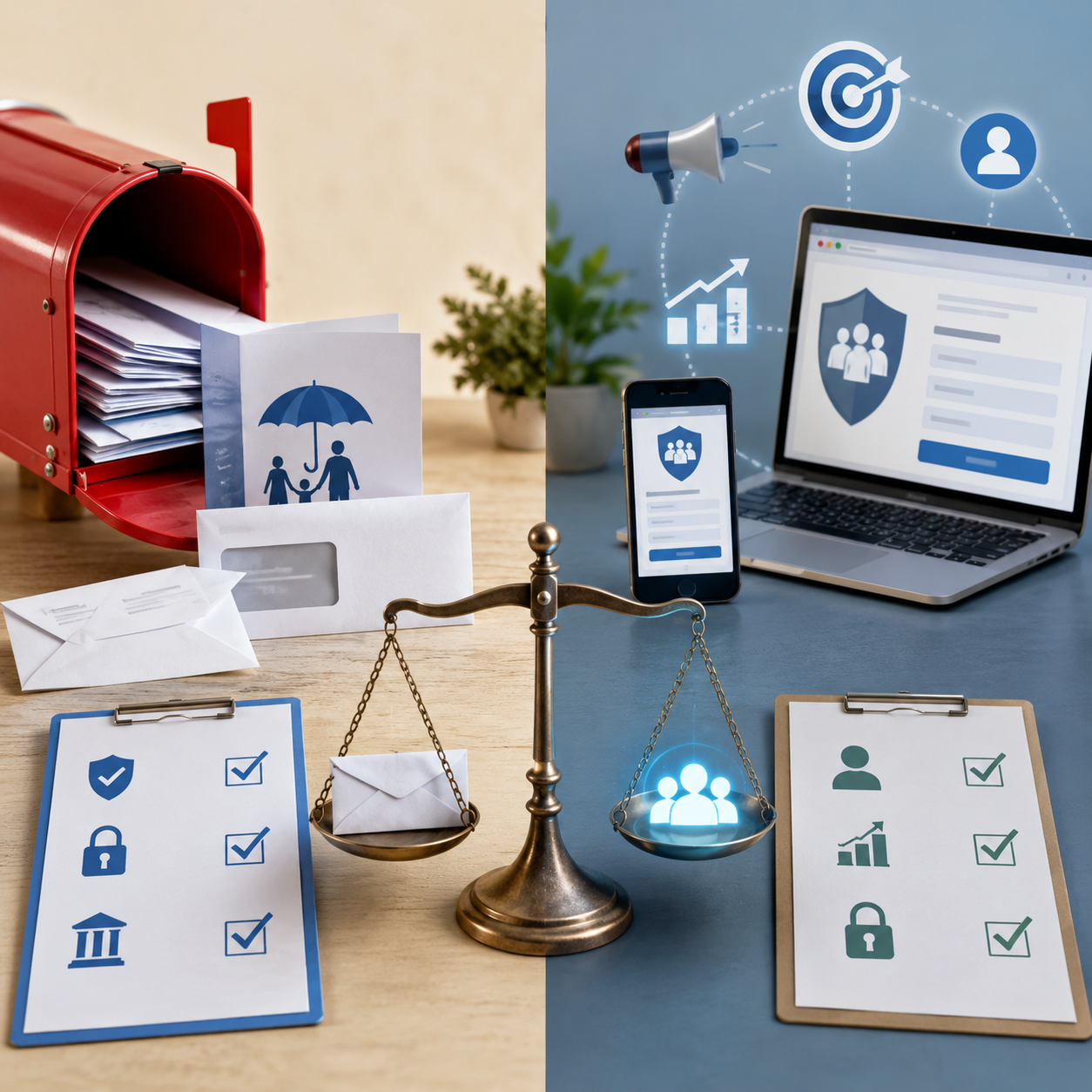
In the fast-changing world of insurance marketing, knowing whether to rely on direct mail or digital campaigns—or how to blend them—can define your growth trajectory. Whether you’re starting a new campaign or refining your approach, let’s break down how each channel supports lead generation and compliance in 2026.
What Are Direct Mail Campaigns?
Traditional outreach explained
Direct mail campaigns involve sending physical marketing materials—such as postcards, letters, or brochures—directly to your prospects’ mailboxes. Unlike digital marketing, which is instantaneous, direct mail is tactile and often feels more personal. You can use it to introduce yourself, promote an event, or share insights that prompt recipients to reach out.
Use cases in insurance marketing
Independent financial professionals often leverage direct mail to reach targeted households—especially pre-retirees and retirees—who may prefer more traditional forms of communication. Mailers are effective for appointment setting, educational seminars, annual review reminders, or introducing new offerings (without referencing specific product names). The format is also popular for nurturing relationships and reinforcing your professional brand in local markets.
Key components of a mail campaign
A well-designed direct mail campaign typically includes:
- Clear messaging with a compliance-approved call to action
- Professionally branded materials tailored to your target audience
- Personalized touches, such as handwritten notes or custom addressing
- Coordination with your overall marketing calendar
Direct mail efforts should also be timed, tracked, and measured—so you can understand lead quality and optimize future campaigns.
How Do Digital Campaigns Work?
Lead generation through online channels
Digital campaigns use online channels—like social media, search engines, or email—to generate leads and nurture prospects. You can create landing pages, run educational webinars, or share expert content to drive engagement. Real-time analytics help you see how people interact with your content, so you can follow up promptly and guide them down your marketing funnel.
Audience targeting strategies
One of the greatest strengths of digital marketing is the ability to target with precision. You can narrow your audience by age, location, interests, or behaviors. For insurance professionals, this might mean targeting local retirees on Facebook, or running ads geared toward individuals researching retirement planning on search engines. Retargeting tools keep your message top-of-mind for those who’ve previously engaged with your website or email campaigns.
Common digital platforms for professionals
Some of the most impactful digital channels for independent financial professionals include:
- Email marketing platforms for personalized outreach
- Social media (LinkedIn, Facebook) for thought leadership and relationship-building
- Paid search (Google Ads) and display networks for reaching in-market prospects
- Your own website and educational blog content
Each platform offers unique methods for tracking leads, so you can determine where to double down based on measurable performance.
What Compliance Requirements Apply?
Advertising regulations
Whether using mail or digital, insurance marketing is subject to strict compliance rules. All communications must avoid misleading claims, clearly identify you as an independent financial professional, and provide accurate, product-neutral information. Overpromising results or offering guarantees (explicit or implied) is prohibited.
Miscellaneous marketing do’s and don’ts
- Do: Use compliance-reviewed templates and standardized disclosures.
- Do: Keep detailed records of all marketing materials and approval processes.
- Don’t: Reference carrier or product names directly, unless pre-approved for educational use.
- Don’t: Use superlatives or make specific performance claims.
- Do: Follow all privacy and data security standards, especially with digital data collection.
Compliance tips for each channel
For direct mail, ensure every piece passes through compliance review and includes necessary disclosures—such as your status as an independent professional. For digital campaigns, make sure web forms, landing pages, and social posts are approved, and that tracking or retargeting complies with privacy laws (like CCPA or evolving US/EU regulations). Lean on your IMO or marketing support team for timely guidance and updates.
Which Channel Delivers Better Leads?
Lead quality considerations
Direct mail can produce high-quality leads, especially if your target demographic appreciates traditional correspondence or invites to exclusive events. Recipients are often more likely to recognize your name or brand from a physical piece.
Digital channels, on the other hand, cast a wider net and make it easier to nurture leads over time. However, leads may vary in quality—some may be just researching, others are ready to act. Timely, thoughtful follow-up is essential to move digital leads toward conversion.
Evaluating conversion potential
Conversion rates for mail and digital campaigns differ based on audience, message relevance, and follow-up. While digital offers robust tracking and fast feedback, direct mail delivers memorability. The most successful insurance practices often combine both channels, measuring response and cost per lead to understand where their best ROI lies.
Aligning channel with business goals
Your ideal lead-generation mix depends on your goals:
- Want to expand quickly? Digital brings fast, scalable reach.
- Looking to nurture warm, local relationships? Direct mail makes a lasting impression.
- Seeking sustainable growth? Integrate both channels for broader impact and long-term brand recognition.
Are There Hidden Costs to Consider?
Budgeting direct mail campaigns
Direct mail carries upfront costs for design, printing, postage, and often list rental. However, response rates can justify higher expenses—especially if your campaign targets a curated, high-value audience. Consider the long-term nurture value, not just immediate conversion.
Digital spend considerations
Digital spending fluctuates with ad bids, list sizes, and software subscriptions. Costs can seem lower at first, but competition for quality leads and ongoing content creation add up. Be sure to factor in time for compliance reviews and regular optimization.
Long-term return on marketing investment
The strongest return often comes from blending outreach types. Direct mail may convert fewer—but higher-value—leads per campaign. Digital channels can scale awareness and fill your pipeline. Look at total pipeline value generated versus marketing outlay, not just a single campaign’s short-term yield.
What’s the Best Mix for 2026?
Integrating traditional and digital strategies
In 2026, the insurance landscape rewards those who build multichannel marketing. Start by mapping your client journey, identifying where prospects are most likely to engage, and developing parallel touchpoints—like a mailed seminar invitation followed by an email RSVP or a personal LinkedIn connect after a direct mail introduction.
Balancing compliance and reach
Choosing the right mix is more than just volumes—it’s about staying compliant at every turn. Use your marketing partner’s resources to review campaigns, train staff, and maintain consistent documentation. Automated tools for digital consent and mail tracking now make compliance easier and more auditable than ever.
Adapting to changing client preferences
Younger retirees and boomers are increasingly digital-savvy but still value tangible, personal touches. Monitor lead response rates by channel year over year, survey your top clients, and be flexible—adjust your mix as client preferences and compliance standards shift.