Key Takeaways
- Well-structured funnels can enhance both the quality and scalability of insurance leads, supporting business growth.
- Balancing automation with personalization and compliance is key for building trust and optimizing conversion results.
A strategic sales funnel is essential for insurance professionals aiming to attract and nurture quality leads in today’s competitive landscape. Understanding how to design and optimize these funnels can make a measurable difference in your lead generation outcomes—especially as competition and client expectations evolve.
What Are Funnels for Insurance Agents?
Definition of a sales funnel
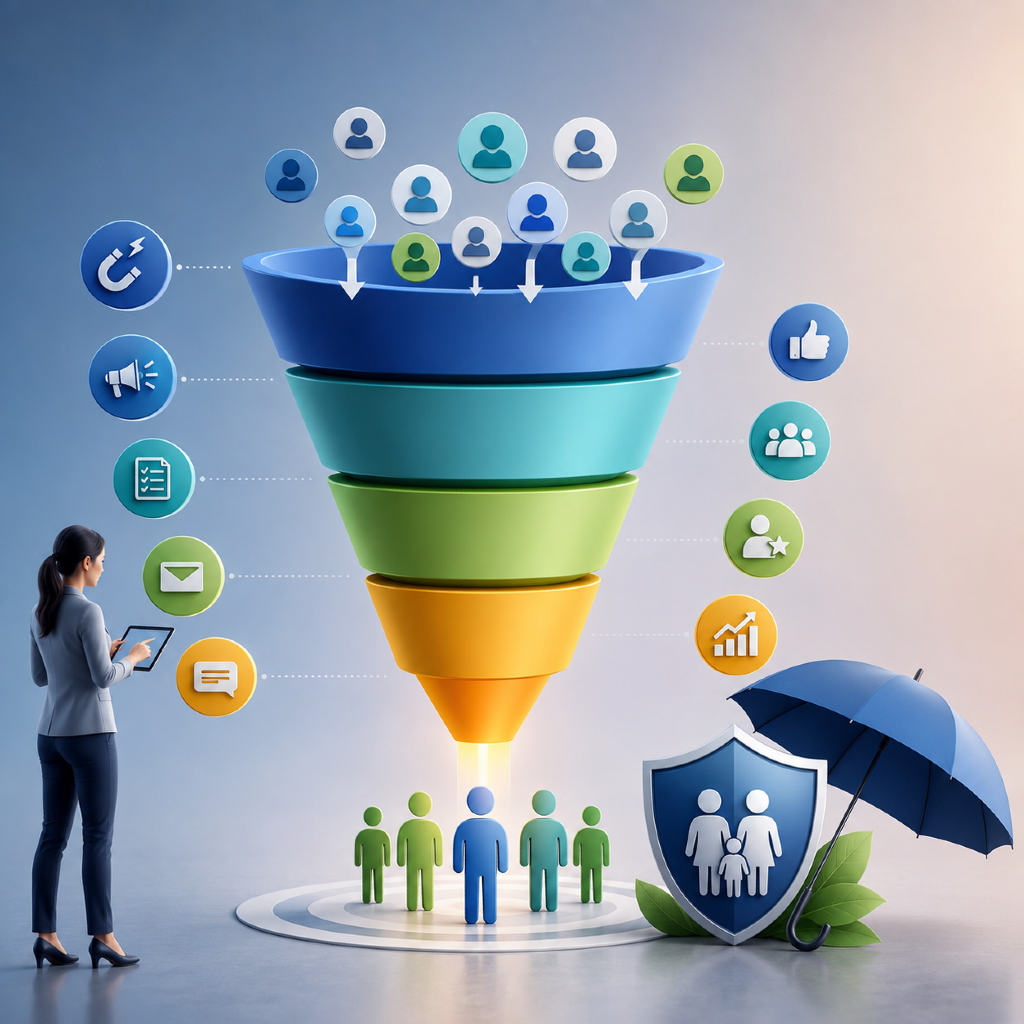
A sales funnel is a structured pathway that guides potential clients from initial awareness of your services to a final action, such as scheduling a consultation or enrolling in a policy review. In insurance, the sales funnel decomposes the client journey into distinct stages, each with tailored messaging and next steps, to incrementally build trust and encourage meaningful engagement.
Stages of the funnel process
Typically, a sales funnel for insurance professionals includes the following stages:
- Awareness: Prospects first discover your services, often through marketing campaigns, digital ads, social media, or referrals.
- Interest: Leads explore your educational resources, attend webinars, or subscribe to your updates, signaling curiosity about your expertise.
- Consideration: Prospects engage further, asking questions, downloading guides, or booking a call, showing intent to learn more.
- Action: The prospect becomes a client—setting up a meeting, completing an application, or agreeing to ongoing communications.
Each stage relies on strategic content and compliant contact methods to foster progress through the funnel.
Why Do Funnels Matter for Lead Generation?
Role in marketing strategy
Funnels serve as the backbone of any effective marketing plan for independent financial professionals. By segmenting the audience and delivering relevant information at the right time, you can guide prospects to take desired actions more efficiently. This structured approach not only saves time but ensures that prospects receive value at every stage, positioning you as a knowledgeable partner.
Impact on business growth
A well-optimized funnel can help you:
- Focus on higher-quality leads more likely to convert,
- Reduce the time spent chasing uninterested prospects,
- Track engagement metrics and refine your tactics,
- Ultimately, achieve more predictable business growth and market share expansion.
Leveraging the right funnel strategies allows you to scale personalized service—one of the most effective ways to drive sustainable lead generation.
What Types of Funnels Exist?
Digital versus traditional funnels
Traditional funnels may involve in-person seminars, direct mail, and networking, while digital funnels use tools like landing pages, webinars, automated emails, and social media retargeting. Both approaches share the common goal of guiding a prospect through each stage, but digital funnels provide greater scalability, analytics, and the ability to test improvements quickly.
Automated funnels and personalization
Automation in insurance marketing lets you follow up consistently and efficiently—automated emails, reminders, and pre-recorded webinars keep leads engaged without constant manual input. However, successful funnels also integrate personalization, ensuring clients feel understood and valued, rather than simply processed. This balance matters because a heavy-handed automated approach risks undermining trust and relationship building.
How Do Funnels Affect Client Trust?
Building relationships through funnels
A strong funnel isn’t just about efficiency; it’s about nurturing genuine relationships. Through timely resources—such as retirement planning guides, educational videos, or personalized outreach—you reinforce your commitment to helping clients understand their options. This approach builds credibility and encourages leads to reach out when they’re ready to take the next step.
Compliance considerations in communication
Every touchpoint within your funnel must adhere to compliance requirements. Communications should be clear, avoid product or carrier specifics unless appropriate, and refrain from exaggerated claims. Instead, focus on product-neutral education, professional support, and strategic guidance. By consistently applying compliance-safe language, you instill confidence and avoid potential regulatory risks.
Pros and Cons of Funnel Strategies
Advantages: Efficiency and scalability
Funnel strategies allow you to automate repetitive tasks, freeing up time for higher-value activities like one-on-one consultations or advanced case design. Scalable processes mean you can nurture more leads simultaneously, expand your reach, and reinforce your expertise without exhausting your bandwidth.
Limitations: Over-automation and personalization
The downside? Over-automation can make interactions feel impersonal, leading prospects to disengage or mistrust your intentions. It’s crucial to review and refine your communications so they remain authentic, responsive, and genuinely helpful—integrating personal touches where possible.
Which Funnel Methods Drive the Best Leads?
Lead quality versus quantity
Not all leads provide the same value. While certain funnel tactics (such as broad paid ads) may net a high volume of prospects, the true driver of business growth is quality—leads that are more likely to convert into loyal clients. Tailoring your funnels around educational value and clear positioning typically attracts more informed, motivated prospects.
Evaluating conversion metrics
To measure funnel performance, focus on conversion-related KPIs—such as initial contact-to-appointment ratio, email open and response rates, or the percentage of prospects who become clients. Regularly review your metrics and pivot strategies based on actual outcomes, not just activity levels. This data-driven approach supports ongoing improvement in both lead quality and business efficiency.
How to Start Building Effective Funnels
Key components to implement
Start by clearly mapping your prospect journey. Identify the main questions and concerns your target audience faces at each stage. Develop compliant educational materials—like case studies, blogs, or webinars—that answer these questions and build trust. Integrate digital tools such as landing pages, automated email sequences, and CRM systems to streamline your process.
Best practices for independent professionals
- Use friendly, informative language in all content.
- Avoid jargon that could confuse your audience.
- Always ensure communications are compliant and product-neutral.
- Regularly audit your funnel to spot and remove bottlenecks.
- Experiment with new engagement tactics but monitor compliance closely.
By keeping these points in mind, your funnel can become a powerful, sustainable engine for lead generation and client engagement.